


Hire for the agentic era
In my last article, I wrote about whether developers would follow the path of farmers or radiologists. The short answer: radiology. Today, I want to share what we're observing in the market as customers start to change how they hire.
HackerRank ran 32% more technical interviews last year than the year before. Companies aren't hiring fewer engineers. They're hiring differently.
The broader data backs this up. An analysis of TrueUp data, which tracks job openings at over 9,000 tech companies globally, shows 67,000 engineering roles open right now. 26,000 in the U.S. alone.
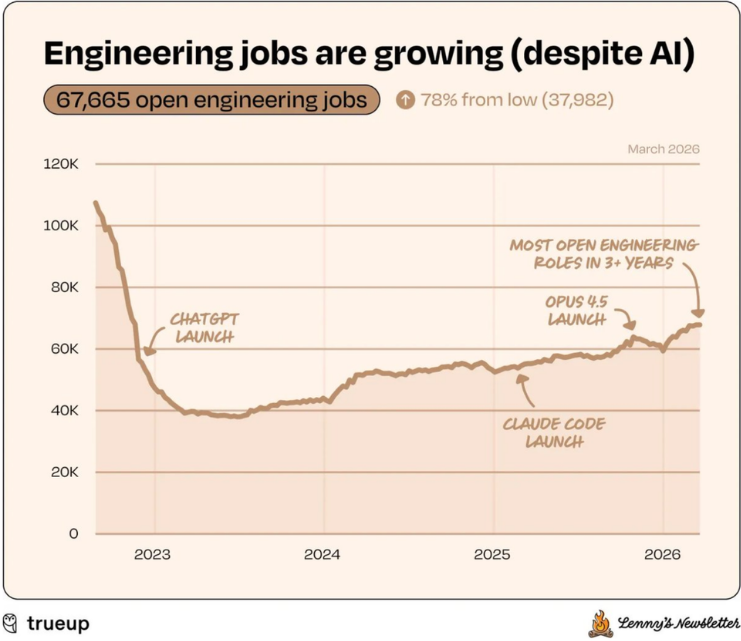
We don't know if there would have been more roles without AI. But we know AI didn't eliminate the demand for developers. It changed what the job actually looks like.
The job fundamentally changed. The interview process has to keep up.
What "Agentic Era" Actually Means
To understand what's different, it helps to see where software development is headed. It's evolving across three clear stages:
Stage 1: Developers use agents for their own work. AI assists with code generation, debugging, and refactoring. The developer is still the producer.
Stage 2: Developers move to asynchronous workflows. They break work into tasks, run multiple agents in parallel, and synthesize the output. The developer becomes a supervisor.
Stage 3: Developers build and manage agents that run autonomously. Agents pick up tickets, plan, implement, test, open PRs. The developer reviews and makes the call to ship.
Today, many developers are already operating at Stage 3. LeetCode-style puzzles won't be helpful in finding them.
The Interview Needs to Change Across Three Dimensions
If the job has changed this much, the interview has to change too. Here's how we think about it across three dimensions:
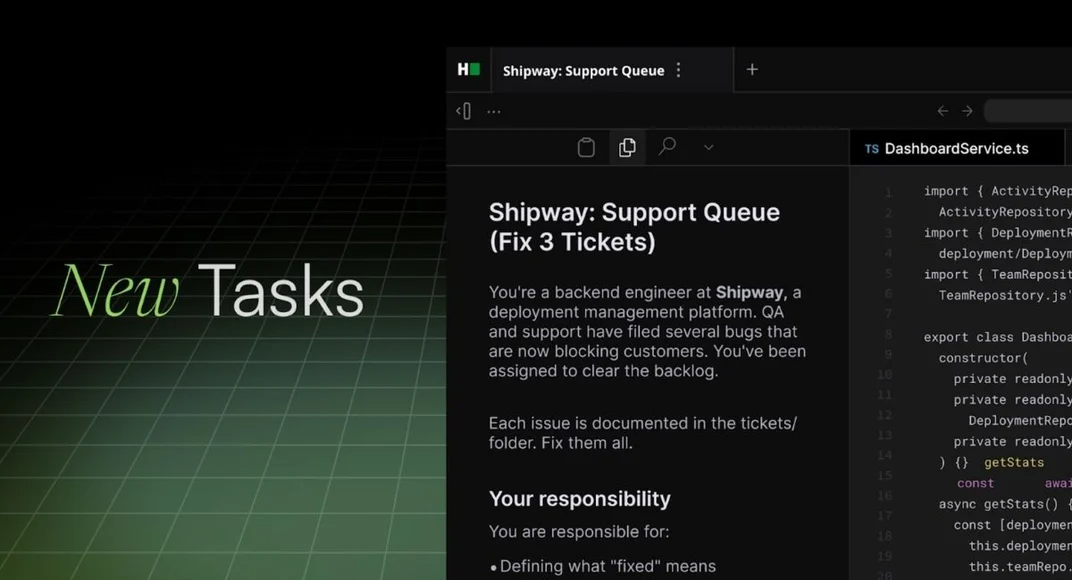
1. Tasks: Questions are evolving from traditional algorithmic-style to real tasks in code repositories.
Old: Solve this data structures and algorithms question.
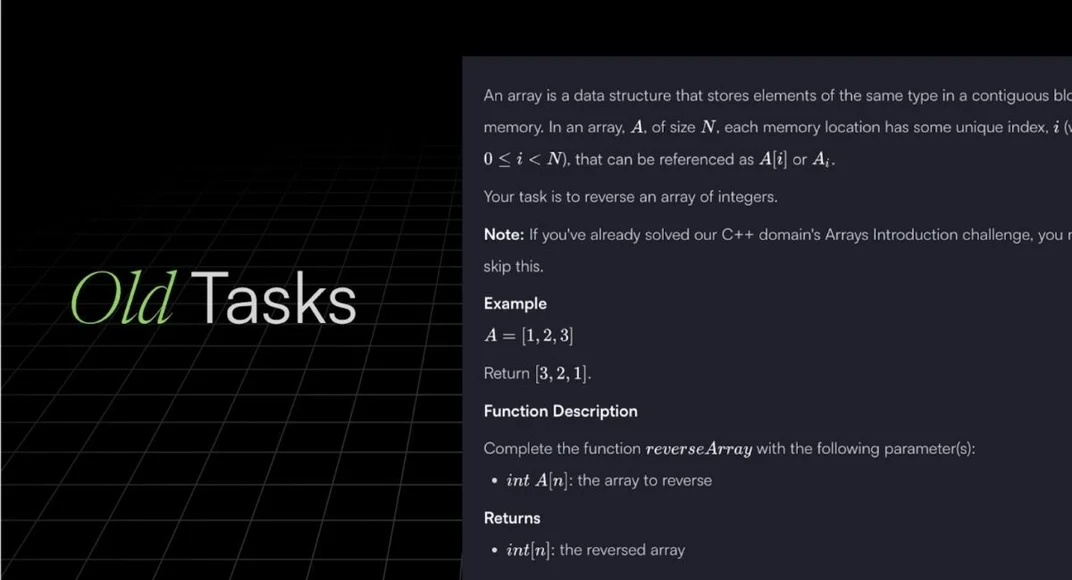
New: Fix a customer support request. The codebase has 50 files. Use AI how you normally would.
2. Evaluation: AI can write functionally correct code. That's not the filter anymore. The filter is judgment, knowing what's safe to ship.
Old: Can you write functionally correct code? Does your algorithm have the right time complexity?
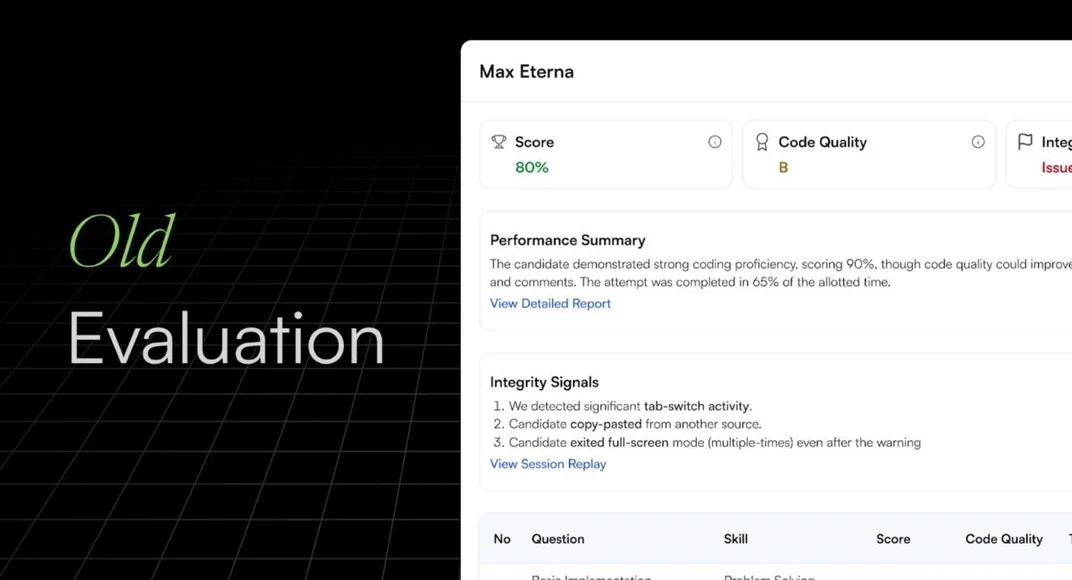
New: How effectively do you use AI to accomplish the task? When do you trust its output? When do you push back? How well do you review AI-generated code?
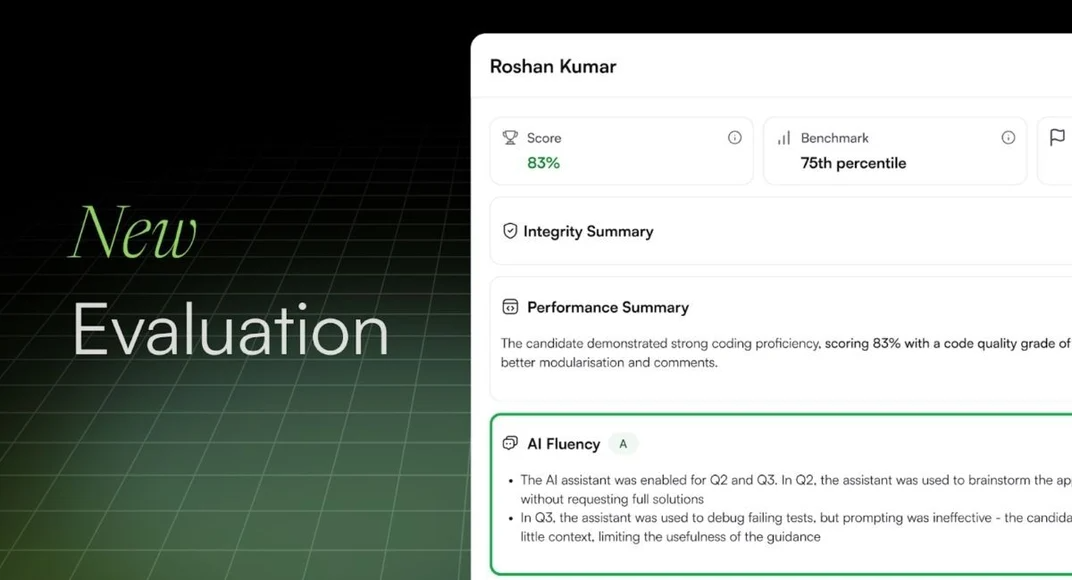
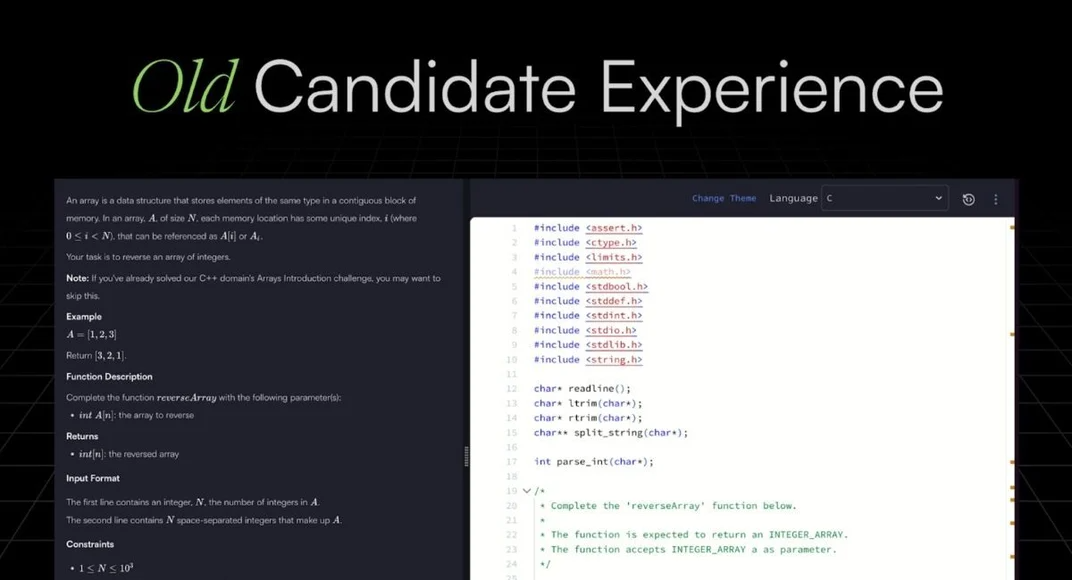
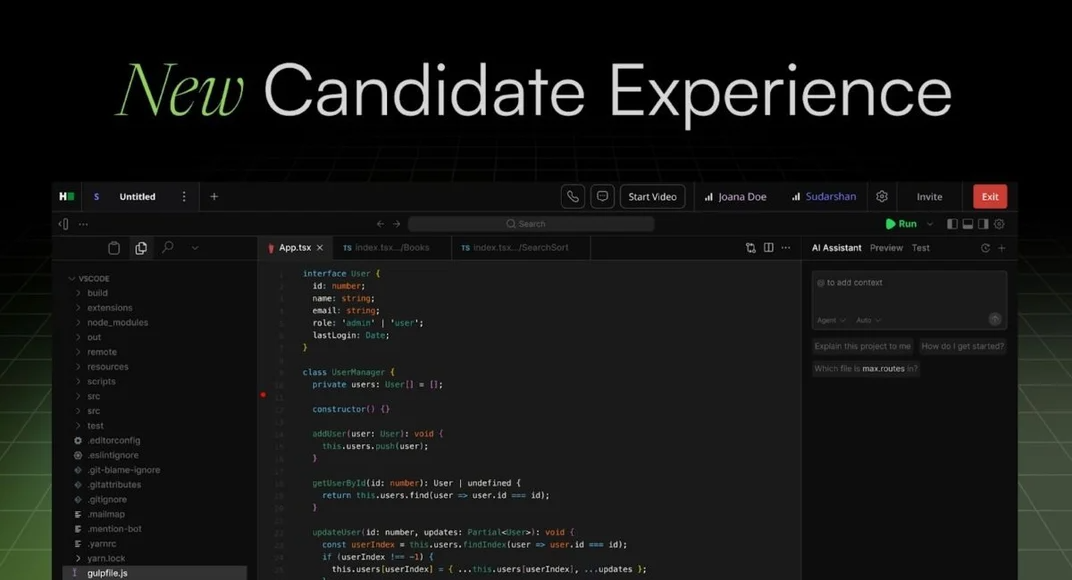
3. Candidate experience: The experience should mirror how developers actually work.
Old: A single-file code editor. No AI. No terminal. No file navigation.
New: Full IDE with AI assistant. Choose your model. Run agents in parallel. Terminal access. Multi-file navigation. Cursor-like or Claude Code-like experience
How We're Helping Companies Make This Shift
Changing hiring processes is hard. Recruiters and hiring managers need training on the new rubric. Candidates need to understand the new format. Legal needs to sign off on AI usage.
We've been working through this with many of our customers already, and running active pilots with several more.
If you're thinking about modernizing your hiring process, let me know!


